

Track record
What the initiative has delivered
Stated at the level the surviving records evidence, and no further. Where a figure is not supported by a record in hand it is not published here — not rounded, not estimated, and not carried over from a poster or a press release.
How to read this page. Where a record is described as not available, that means it is not present in the material compiled for publication. It does not mean the record does not exist. Attendance registers, issuance logs and signed agreements may be held by the implementing office, by the training institute or by partner organisations, and this page is updated as they are produced.
Delivered
Kano State, 30 January – 1 February 2025
The initiative's one fully documented delivery, evidenced by primary artefacts.
A five-track capacity-development training programme was delivered at the Atlas Training and Development Institute, Kano State, from 30 January to 1 February 2025, under the Office of the Special Assistant to the President on Capacity Development. It closed with a certificate ceremony and a business pitch competition.
The five tracks delivered were:
- Business Development and Entrepreneurship
- Agricultural Training on Irrigation
- Information and Communication Technology, including applied AI
- Solar Installation and Maintenance
- Content Creation and Development
Three of those five are the streams of the Nasarawa State pilot. Solar installation and content creation are not carried forward as separate streams: solar is carried forward as equipment, in the shared irrigation kits awarded to producer clusters, and content creation is taught inside unit four of the Digital Skills syllabus.
Awards
Pitch competition, 1 February 2025
Each award is evidenced by a dated presentation cheque carrying the initiative's mark and the seal of the Office of the Special Assistant to the President.
| Place | Venture | Award (₦) |
|---|---|---|
| First | Sammy’s Stitches | 1,000,000 |
| Second | Wise Technology | 500,000 |
| Third | Mood Box | 200,000 |
| Total | Three ventures | 1,700,000 |
What those three ventures are trading today is not yet recorded. Establishing it is part of the follow-up work described at the foot of this page.
Demand
Applications for the 2025 cohort
The single most defensible demand statistic the initiative holds: a complete, dated application register.
Two days, twice oversubscribed
401 complete applications were received across two days against 200 planned places — a two-to-one oversubscription, with no paid advertising on record. Applicants came from 24 states across all six geopolitical zones; 88.7 per cent were aged 18 to 34.
First-choice interest was led by ICT and AI at 38.9 per cent and business and entrepreneurship at 34.7 per cent — direct, dated evidence for the digital and enterprise halves of the Nasarawa State design.
The honest caveats
- Women were 36.7 per cent of applicants — below the 50 per cent inclusion floor the scheme commits to. That is a baseline to be improved on, and it is why deliberate recruitment measures are built into the Nasarawa State pilot.
- Only eleven self-declared farmers applied. That cohort was not marketed to farmers, so the figure is not evidence of weak agricultural demand — but neither is it evidence of strong demand, and the agriculture case for Nasarawa State rests on State production data instead.
- A further 600 expressions of interest from 413 distinct correspondents were received through the website between 16 February and 18 March 2025. Those are enquiries, not applications, and are not counted as such.
Evaluation
Thirty-two structured returns
The Kano programme was formally evaluated, and the instrument survives in full.
32 completed post-training evaluation returns were collected and collated on 4 February 2025, against a structured instrument covering objectives achievement, content relevance and organisation, instructor effectiveness, participation, materials and logistics, together with free-text feedback.
Respondents named at least eighteen distinct facilitators, and the titles they gave map onto all five tracks delivered. The returns are the reason the same feedback instrument is carried into the Nasarawa State pilot.
Evidence
The photographic record
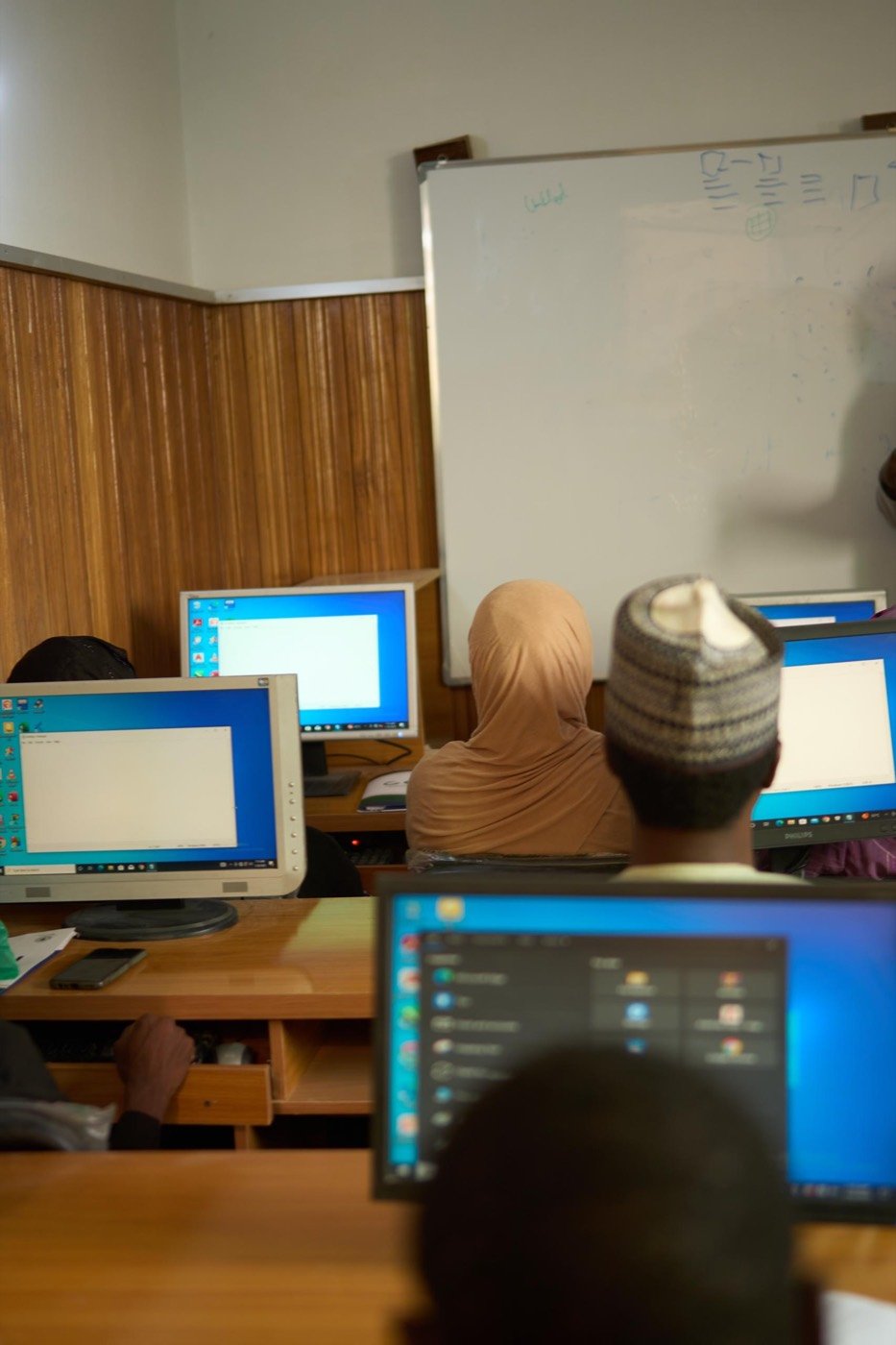
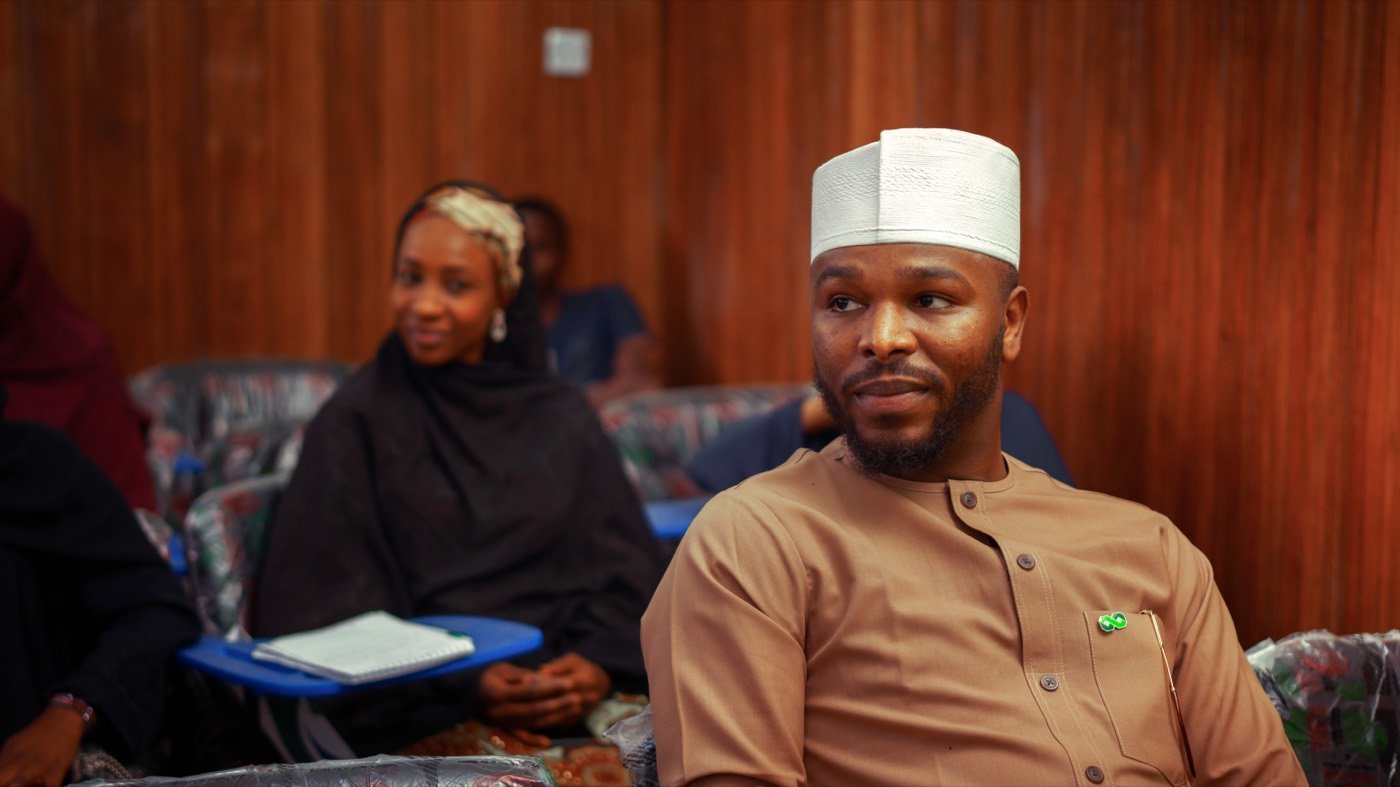
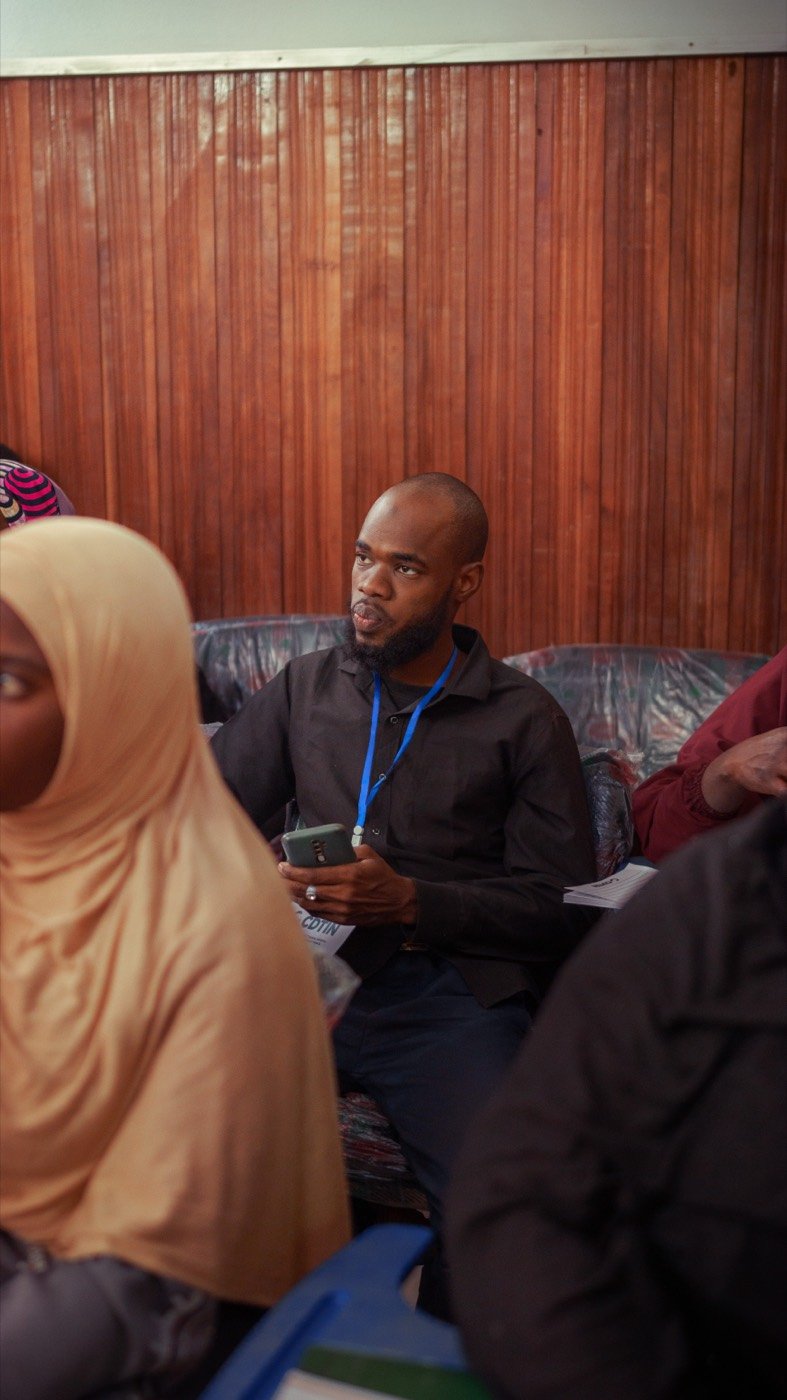
203 professional photographs of the Kano programme across eight categories, together with a twenty-frame curated selection. Every image published carries its true programme, location and date.

Withheld
What this page does not claim
A programme that overclaims and is then checked is in a worse position than one that states a modest baseline honestly. These figures are not published, and should not be attributed to this initiative by anyone quoting it.
| Not published | Why |
|---|---|
| Any number of people “trained” | What the compiled material holds is 401 applications, a planned intake of 200, and 88 photographed certificate presentations. Those are three different numbers and none of them is an attendance figure. The register that would supply one has been requested from the record-holders. |
| Any completion or drop-off rate | There is no completion register behind the certificate in the material compiled. The certificate issuance log would convert the photographic evidence into a hard number. |
| Any satisfaction or objectives-achievement score | The 32 evaluation returns exist but are not yet scored, for the reason given above. |
| Any job, enterprise-creation or income outcome | No outcome data has been collected on the Kano cohort to date. See the note below on the tracer study. |
| The 10,000, 100,000 and 1,000-youth figures | These appear in announcements, posters and a February 2025 press release, issued with a private training academy, for programmes that were launched or proposed. They are announcements, not delivery, and they are not track record. |
| Media coverage, and named partners | No broadcast clipping or recording is held. Organisations engaged by the initiative are described as engaged, not as partners, until a signed instrument exists. |
Outcome data is being collected. An eighteen-month tracer study of the Kano cohort is being administered against the 2025 application register, recording employment, self-employment, enterprises started and income change, together with a status check on the three prize-winning ventures. It is the same baseline–endline–tracer design the Nasarawa State pilot commits to, field-tested on the earlier cohort. Its findings are published here when it reports, whatever they say.